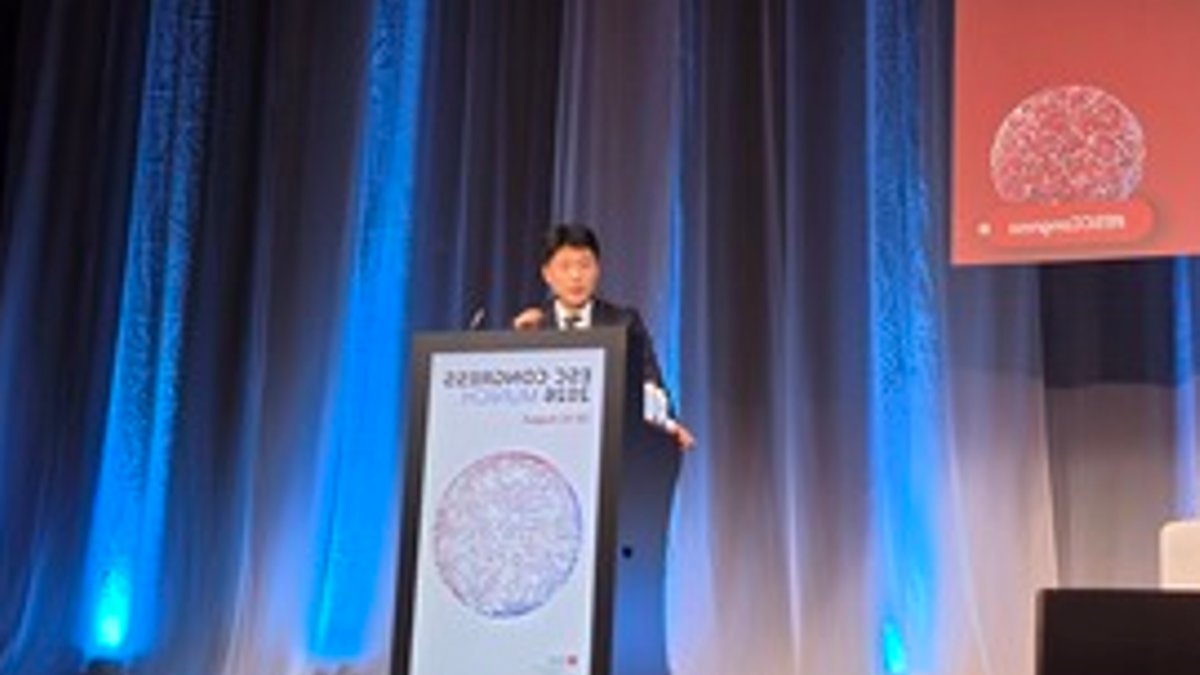
A Korean randomized trial has shown that artificial intelligence can help physicians and patients make more selective decisions about atrial fibrillation catheter ablation, reducing the number of procedures and procedure‑related complications without compromising one‑year rhythm control. The AI‑PAFA trial was presented by Hwang Taehyun of Severance Cardiovascular Hospital at the European Society of Cardiology Congress 2026 in Munich. It moves beyond the familiar use of AI to predict outcomes after ablation.
How the risk models work
The trial combined two previously developed models that examine different aspects of AF biology. AI‑LAS uses eight non‑invasive variables to estimate left atrial wall stress, a marker of atrial stretching and remodeling. AI‑STAAR relies on 15 non‑invasive variables to predict the likelihood of rhythm‑control failure and progression to permanent AF despite catheter ablation.
Related: Organ failure after admission predicts worse liver outcomes
AI‑STAAR was originally derived from 1,214 patients and later validated in an independent cohort. Patients were classified as high risk when they had high AI‑LAS risk together with intermediate or high AI‑STAAR risk; other evaluable combinations were categorized as low risk.
The researcher emphasized that the algorithm was never intended to act as an automated gatekeeper. In the AI‑guided arm, the prediction was shown to physicians and patients and incorporated into a discussion of expected benefit, symptoms, alternatives and patient preferences. Even a high‑risk result did not prohibit ablation; the final decision remained with the physician and patient.
Related: How Emsculpt Neo Helps You Achieve Full-Body Toning
Risk stratification outcomes
Among 502 patients assigned to AI‑guided shared decision‑making, 296 were classified as low risk and 178 as high risk. Ablation was still performed in 77.0 percent of high‑risk patients, compared with 85.8 percent of low‑risk patients. Another 28 patients could not be classified under the predefined AI strategy.
The study also gives AI‑PAFA a distinctly Korean angle. Both underlying models were developed from Korean clinical data, and the prospective randomized trial was conducted at a Korean high‑volume AF center. That provides rare evidence moving a homegrown medical AI system beyond retrospective prediction into an actual randomized test of whether giving clinicians its predictions changes treatment decisions and patient outcomes.
Related: Hazelwood’s Sparkling Secrets: Where Love Meets Luxury
Broader implementation would require validation across hospitals with different ablation practices and patient populations. International expansion would add another layer, including local validation and adaptation of how AI‑generated results are presented to physicians and patients. The changing ablation setting is another issue. Most procedures in AI‑PAFA were performed with conventional radiofrequency or cryoballoon ablation. Only six patients in the AI‑guided group and eight in the physician‑guided group received pulsed‑field ablation (PFA), meaning the randomized results largely reflect practice before widespread PFA adoption.