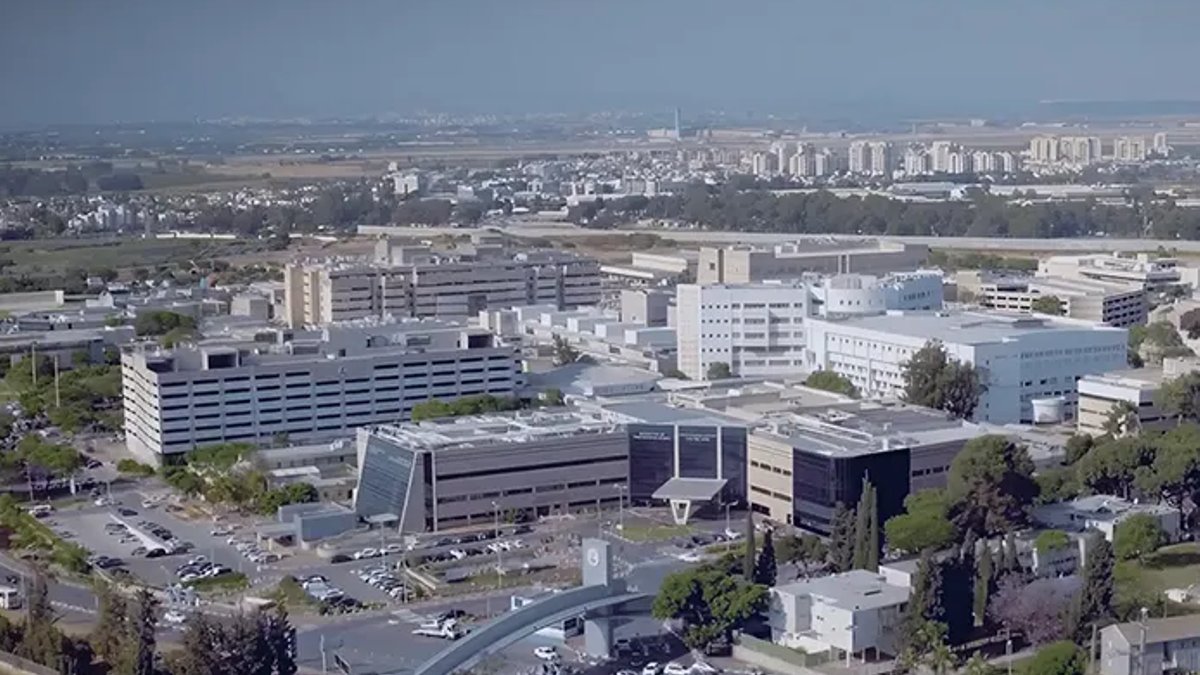
Sheba Medical Center, an Israel-based institution, has become OpenAI’s first international hospital partner. This partnership supports Sheba’s goal to be “AI-powered” by 2030.
The collaboration gives Sheba’s clinicians access to ChatGPT for Healthcare across its network and on mobile devices. It also grants Sheba early access to OpenAI’s latest healthcare models before they become widely available.
A partnership born from within
The initiative began inside Sheba, led by the hospital’s head of engineering. Ayelet Akselrod-Ballin, head and CTO of Sheba’s AI Center, emphasized that the partnership emerged from a real need and a real vision that to really build an AI hospital means not only to bring in the technology but also to educate the people and to give them the ability and sort of self-service, whatever technology is out there.
Sheba’s AI Center, part of its ARC innovation arm, has already developed several AI projects. These include SmartER, a generative AI platform in the emergency department, and Project K, which uses an AI avatar for patient intake. Another system, Beyonder, screens admissions and directs stable patients to Sheba’s virtual hospital.
AI Tackles Global Clinician Shortage
The partnership comes as Israel and much of the world face a shortage of clinicians. According to the OECD, Israel has 3.5 practicing doctors per 1,000 people, below the OECD average of 3.9. The World Health Organization projects a shortage of nearly 1 million health workers in the European Region by 2030.
Akselrod-Ballin views this shortage as a “crisis in healthcare.” She believes AI can help by reducing the time clinicians spend on administrative tasks and information searches. Sheba operates with a lower clinician-to-bed ratio than similar institutions, making AI integration essential.
Akselrod-Ballin’s background in AI for radiology includes a 2019 study where she developed a model combining mammograms with electronic health record data. This model identified 34 of 71 false-negative mammograms in a retrospective test set.
Other studies have shown AI’s operational benefits in radiology. A 2023 trial at four stroke centers reduced the time from hospital arrival to thrombectomy initiation by 11.2 minutes. Another study found a 15.5% improvement in documentation efficiency across nearly 24,000 radiograph interpretations.
Despite these advances, Akselrod-Ballin sees generative AI as distinct from earlier radiology AI. She notes that the work begins with basic tasks, such as reducing time spent on electronic medical records and administrative work, and moves toward full automation in some workflows.
Sheba’s AI Innovations and Partnerships
Sheba’s partnership with OpenAI expands its roster of external AI collaborators. However, the medical center also has substantial internal capacity through its ARC Center, which focuses on deep-tech innovation. This includes translating advanced research and clinical datasets into commercialized healthcare technologies.
The AI Center has developed internal tools like SmartER and Project K. ARC’s broader ecosystem has also spun out or accelerated deep-tech companies like AISAP, whose FDA-cleared platform supports point-of-care cardiac ultrasound.
Sheba’s work on emerging AI workflows often enters areas with limited established guidelines. “There is some regulation, of course, but we are in a way building the regulation, the guardrails, the monitoring, the policy, the governance,” Akselrod-Ballin said. “We’re building it together as we go.”
Alongside the OpenAI rollout, Sheba is building AI capabilities that can extend across departments. The AI Center identifies recurring problems and looks for reusable infrastructure, adding specialized agents or new platforms where needed.
Akselrod-Ballin highlighted Sheba’s five emergency departments, including dedicated oncology and children’s ERs. “What you build for the ER, most of it would be relevant for some of the departments,” she said.
Building Reusable AI Infrastructure
The focus is on creating an agentic infrastructure whose components can be reused across workflows. “We’re trying to really make a generalizable approach,” Akselrod-Ballin said. A sufficiently different workflow might require a new agent or platform.
ARC supports over 50 startups and operates across 31 health systems and more than 300 hospitals. Partnerships with organizations like NVIDIA and Mount Sinai provide channels for sharing technology and implementation experiences.
This workflow approach could also extend into clinical research. Akselrod-Ballin noted the potential for agents to handle operational and administrative tasks within a medical center. Clinical trials, for instance, could benefit from breaking workflows into components addressable across a platform.
AI’s Future in Clinical Research and Beyond
“I’m sure that the clinical trials will be changing the way that they work and will make them significantly faster very soon,” she said. “So things will be moving very fast.”
Expanding AI Applications Beyond Clinical Care
Akselrod-Ballin outlined a vision for AI that extends beyond clinical care, targeting surgical, logistical, and financial workflows. The longer-term vision includes giving employees mobile access to OpenAI’s models along with the ability to build their own agents and use the tools for research.


