

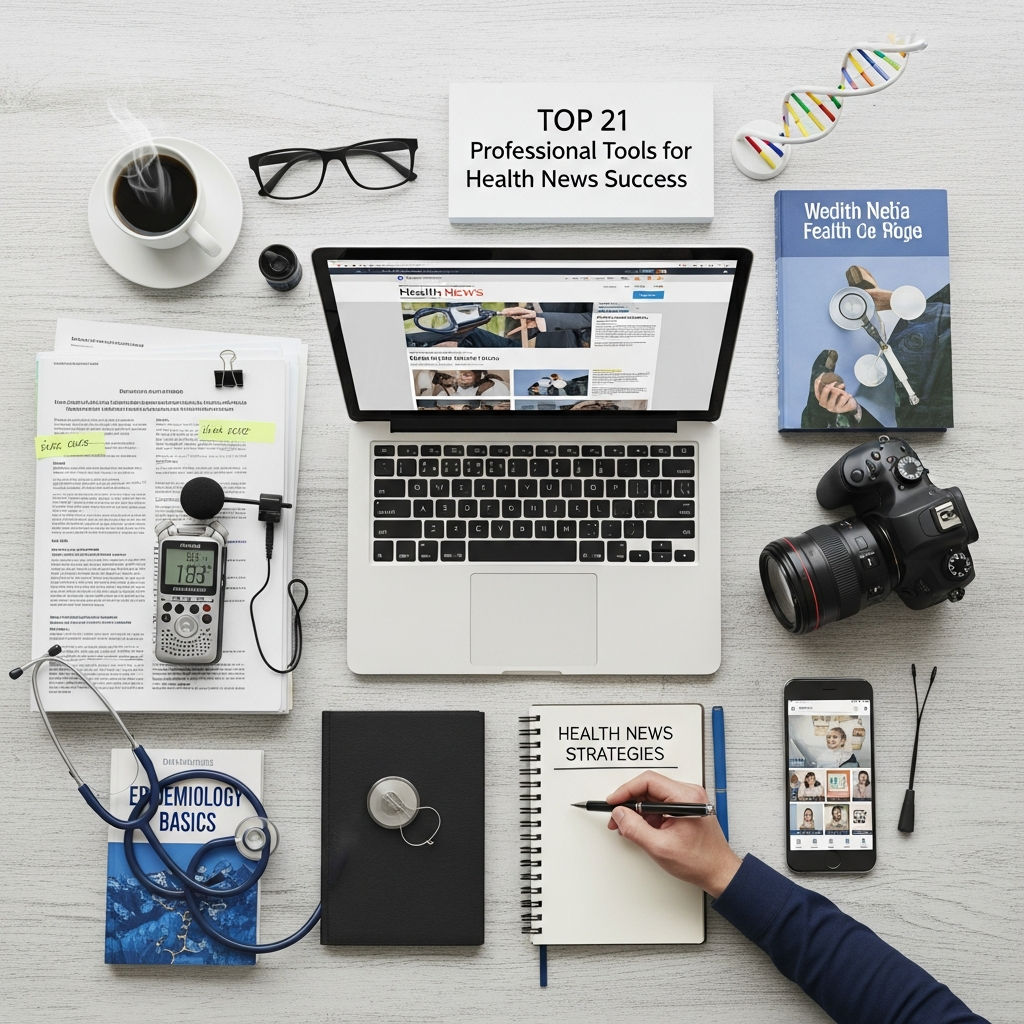
Top 21 Professional Tools for Health News Success
In the fast-paced world of health news, accuracy, speed, and visibility are the three pillars of success. Whether you are a medical journalist, a healthcare blogger, or a digital marketer for a wellness brand, the tools you use determine your authority and reach. Reporting on health comes with a high level of responsibility—often referred to as “Your Money or Your Life” (YMYL) content by search engines like Google. This means the stakes for precision and trustworthiness are incredibly high.
To stay ahead of the curve and ensure your content resonates with both readers and algorithms, you need a specialized toolkit. From clinical research databases to advanced SEO platforms, here are the top 21 professional tools for achieving health news success.
Research and Fact-Checking Tools
Accuracy is the foundation of health journalism. One wrong statistic or a misinterpreted study can damage your reputation and mislead your audience. These tools help you ground your stories in science.
1. PubMed
Managed by the National Center for Biotechnology Information (NCBI), PubMed is the gold standard for accessing biomedical literature. It provides millions of citations from MEDLINE, life science journals, and online books. For a health reporter, it is the first stop for verifying clinical trial results.
2. Google Scholar
While PubMed is specific to medicine, Google Scholar allows you to search across a broader range of disciplines. It is excellent for finding related white papers, theses, and court opinions that might provide a legal or sociological angle to a health story.
3. The Cochrane Library
Cochrane is famous for its “Systematic Reviews.” These are high-quality, independent evidences that summarize the results of multiple studies to determine the effectiveness of healthcare interventions. It is an essential tool for debunking health myths.
4. Statista
Health news often requires data visualization. Statista provides curated statistics, market research, and consumer data across 600+ industries. It is particularly useful for finding data on healthcare market trends, pharmaceutical sales, and global health demographics.
5. HealthNewsReview.org (Archive)
While no longer actively updating, their archive remains a masterclass in health journalism. Their “systematic criteria” for evaluating health news stories help writers understand how to avoid hype and accurately report on the benefits and costs of treatments.
Trend Discovery and Monitoring
To succeed in news, you have to be first—or at least, be the most comprehensive. These tools help you spot emerging health crises, viral wellness trends, and new medical breakthroughs before they hit the mainstream.
6. Google Trends
Google Trends allows you to see what people are searching for in real-time. By filtering for “Health” categories, you can identify seasonal spikes (like flu season) or sudden interests in specific medications or diets.
7. BuzzSumo
BuzzSumo helps you see which health stories are gaining the most traction on social media. It is invaluable for understanding “content gaps”—seeing what people are talking about versus what has actually been reported on with depth.
8. Exploding Topics
This tool identifies rapidly growing trends before they peak. In the health sector, this might mean catching onto a new supplement or a specific mental health movement months before it becomes a standard news topic.
9. Feedly
Feedly is an AI-powered news aggregator. By subscribing to the RSS feeds of major medical journals (like JAMA or The Lancet) and health news outlets, you can monitor the entire industry from a single dashboard.
Content Creation and Medical Visuals
Health topics can be dense and difficult to digest. Creative tools help you break down complex biological processes into engaging, understandable content.
10. BioRender
BioRender is often described as “Canva for scientists.” It provides thousands of pre-drawn icons and templates for everything from cellular biology to medical devices. It allows you to create professional, accurate medical illustrations that enhance the credibility of your news reports.
11. Canva
For social media graphics, header images, and simple infographics, Canva is unbeatable. It offers a variety of health-themed templates that allow you to turn data points into shareable visual content quickly.
12. Hemingway Editor
Medical writing often suffers from “jargon-heavy” prose. Hemingway helps you simplify your writing, highlighting complex sentences and passive voice to ensure your health news is accessible to a lay audience.
13. Grammarly (with Medical Dictionary)
Beyond basic spell-check, Grammarly’s premium version offers tone detection and clarity suggestions. When reporting on sensitive health topics, maintaining a professional yet empathetic tone is crucial.
SEO and Keyword Research for Health
High-quality health news is useless if no one finds it. Search Engine Optimization (SEO) for health requires a focus on E-E-A-T (Experience, Expertise, Authoritativeness, and Trustworthiness).
14. Ahrefs
Ahrefs is a powerhouse for keyword research and backlink analysis. It helps you see which medical keywords are driving traffic to your competitors and allows you to find “long-tail” questions patients are asking online.
15. SEMrush
Similar to Ahrefs, SEMrush offers a robust “Topic Research” tool. It can generate ideas for health news stories based on what is currently trending in search engine results pages (SERPs).
16. AnswerThePublic
This tool visualizes search questions. If you type in “Diabetes,” it will show you hundreds of questions like “Can diabetes be reversed?” or “How does diabetes affect the eyes?” This is perfect for creating FAQ-style health news content.
17. Surfer SEO
Surfer SEO analyzes the top-ranking pages for your target keyword and tells you exactly which terms and headers you need to include to compete. It’s an excellent way to ensure your health news article is “technically” perfect for Google.
Distribution and Audience Engagement
Once your health story is live, you need to get it in front of the right eyes. Distribution tools help you manage your social presence and email newsletters.
18. Mailchimp
Email newsletters are one of the most effective ways to build a loyal audience for health news. Mailchimp allows you to segment your audience—for example, sending heart health news to one group and pediatric news to another.
19. Buffer
Consistency is key on social media. Buffer allows you to schedule your health news updates across Twitter, LinkedIn, and Instagram, ensuring your content reaches different time zones without manual effort.
20. Hunter.io
In health journalism, you often need to reach out to experts for quotes. Hunter.io helps you find the professional email addresses of doctors, researchers, and PR representatives at major hospitals or universities.
Organization and Workflow
Managing an editorial calendar for a health site requires precision and collaboration. These tools keep your team on track.
21. Trello or Notion
Both tools are excellent for managing the lifecycle of a news story—from the initial pitch to research, drafting, medical review, and finally, publication. Notion is particularly popular for health writers because it allows you to build a personal “knowledge base” of medical studies and expert contacts.
Conclusion: The Future of Health News Success
The landscape of health news is constantly evolving. With the rise of AI and the increasing scrutiny of medical information online, the tools you choose will be your greatest asset. Success in this niche isn’t just about traffic; it’s about becoming a trusted source of information that helps people live healthier lives.
By integrating these 21 tools into your workflow, you can ensure that your health news is factually sound, visually engaging, and optimized for the modern digital reader. Remember, in the world of health reporting, the most important tool you have is your commitment to the truth—but these digital platforms certainly make the journey to success a lot smoother.